Stretching After 60: A Gentle Routine to Stay Flexible
Stretching is a quiet kind of exercise. It will not make your heart beat faster or build big muscles, but it helps your joints and muscles move more freely, and that matters for everyday things like reaching a high shelf, putting on socks or looking over your shoulder when you drive. This guide explains what health agencies say about flexibility, how to stretch safely, and a gentle head-to-toe routine that you can do standing or in a sturdy chair. It is a general guide, so ask your own health care provider what is right for you.
Key takeaways
- Flexibility is one of four types of exercise for older adults, along with endurance (aerobic), strength and balance.
- CDC’s weekly targets for adults 65 and older name aerobic activity, muscle strengthening and balance. Stretching is a useful addition, not a replacement for them.
- Warm up first, move slowly, hold each stretch steady, and stop at a mild pull. Pain is a signal to ease off.
- Stretching on most days, even for a few minutes, is a reasonable goal according to Harvard Health.
- If you have had surgery or a joint replacement, or you feel dizzy or have pain, talk to a health care provider before you stretch.
What the health agencies say
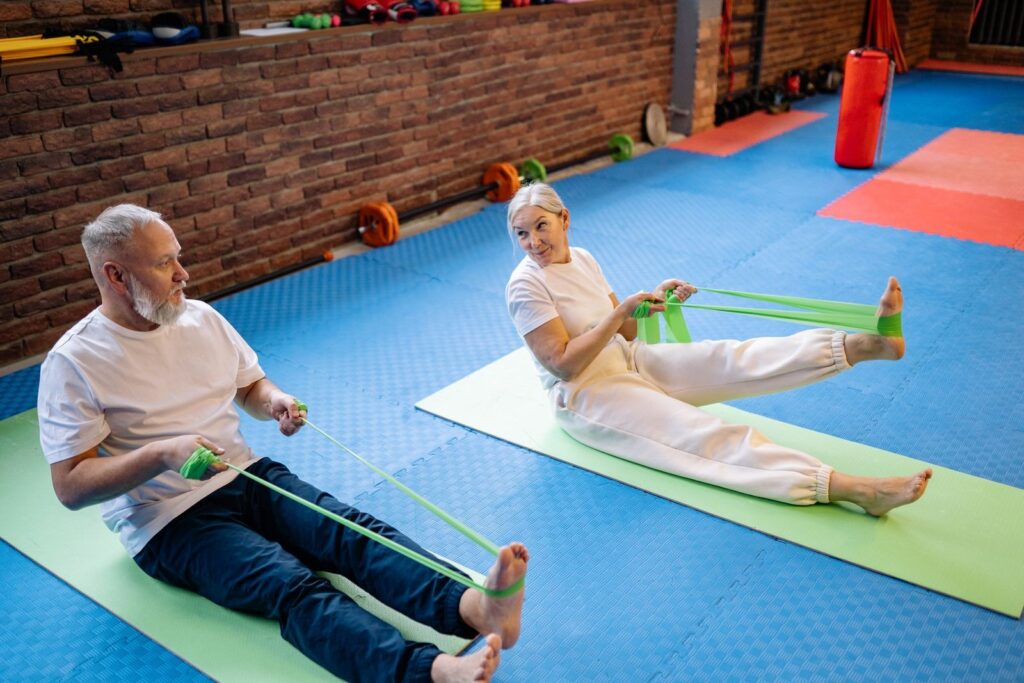
MedlinePlus, a service of the National Library of Medicine at the National Institutes of Health, describes four types of exercise for older adults: endurance, strength, balance and flexibility. It says flexibility exercises stretch your muscles and can help your body stay limber. It also links to stretching videos from the National Institute on Aging (NIA).
The weekly targets that the Centers for Disease Control and Prevention (CDC) gives for adults 65 and older look a little different. They cover three things, and the table below sets out all four types side by side.
| Type | What it does | CDC weekly target for adults 65+ |
|---|---|---|
| Aerobic (endurance) | Raises your heart rate, such as brisk walking | 150 minutes of moderate activity, or 75 minutes of vigorous activity, or a mix |
| Strength | Works the large muscles, such as with weights or bands | At least 2 days a week |
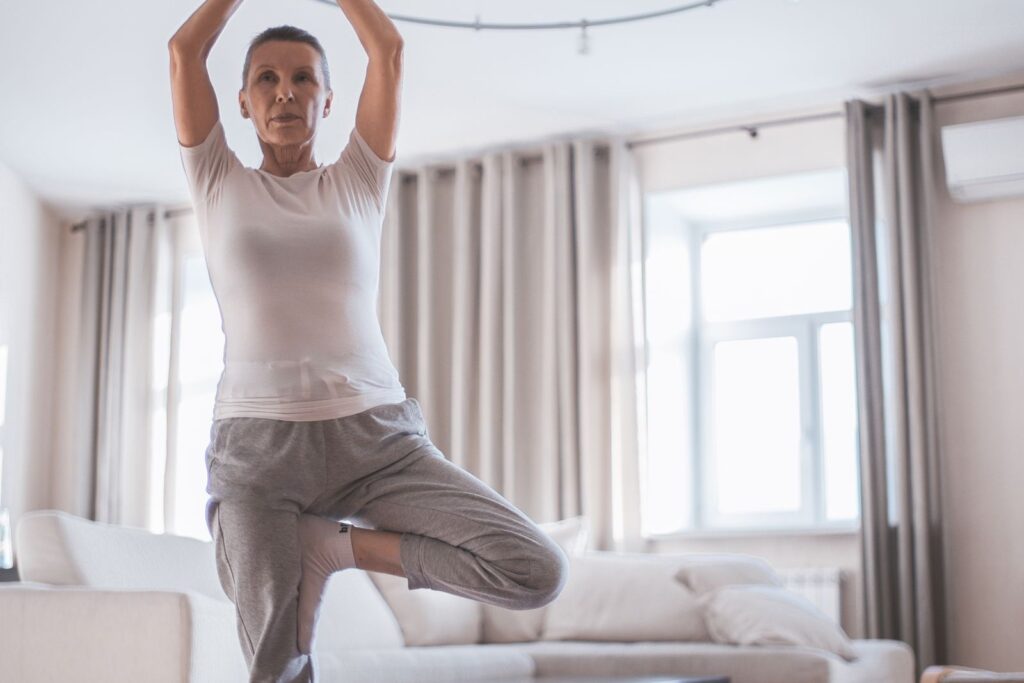
| Balance | Helps prevent falls, such as standing on one leg | Activities that improve balance |
| Flexibility | Keeps muscles and joints able to move | Not listed on the CDC pages used here |
In other words, stretching does not replace walking, strength work or balance practice. The CDC pages used for this article do not say whether stretching counts toward the 150 minutes, so treat it as extra. The Physical Activity Guidelines for Americans, published by the Department of Health and Human Services, are the base for these targets. The page I opened for them did not give details for older adults, so the numbers here come from CDC.
What stretching can and cannot do
Harvard Health Publishing says stretching mainly improves flexibility, and that flexibility matters more as you age. It also says stretching is not a reliable way to prevent sore muscles or injuries. So be honest about the goal: easier movement, not a promise of fewer injuries or falls. For falls, MedlinePlus points to balance exercises.
Why people still bother
Think of the small jobs that need a bit of reach or bend: taking a pot from a low cupboard, turning to check a blind spot, tying a shoe, or getting out of a car. Flexibility is about whether your joints can move far enough for those tasks. Harvard says the need for it grows with age. Ask yourself which of these tasks have become harder, and let your answer guide which stretches you spend the most time on. If one of them has become painful rather than just stiff, mention it to your provider.
How to stretch safely
Warm up first
Cold muscles are less ready to stretch. Harvard suggests a few minutes of easy movement that looks like what you are about to do, such as marching in place, arm circles or gentle squats. Keep your posture tall and keep breathing. Save the longer holds for after your muscles are warm, for example at the end of a walk.
Hold, do not bounce
Move slowly into each stretch and hold it still. Harvard notes that the American College of Sports Medicine suggests holding 10 to 30 seconds, and up to 60 seconds for older adults. Its own routine is to hold at least 15 seconds and repeat until you reach 30 to 60 seconds in total for that stretch. MedlinePlus describes a seated hamstring stretch held 10 to 20 seconds and repeated five times per leg.
Mild tension, not pain
Harvard says to stretch to a mild feeling, not discomfort, and to take extra care with the shoulder, which is a complex joint. If it hurts, back off. If it still hurts, stop.
Keep breathing
Do not hold your breath. MedlinePlus advises keeping your breathing easy during exercise. A simple habit is to breathe out slowly as you ease into the stretch.
A simple head-to-toe routine
This routine is an example built from the body areas that Harvard lists: neck, shoulders, chest, trunk, lower back, hips, legs and ankles. It is not a prescription. It takes about 10 to 15 minutes. Use a sturdy chair without wheels, and place it against a wall if you can. If any move feels wrong for your body, skip it.
- Warm up for 3 to 5 minutes. March in place or walk around the room. Seated option: march your feet while sitting tall and swing your arms.
- Stretch each area below. Hold 15 to 30 seconds, rest, and repeat once or twice. Do both sides.
- Finish slowly. Stand or sit for a moment, take a few easy breaths, and then drink some water.
| Area | How to do it | Hold | Seated option |
|---|---|---|---|
| Neck | Look straight ahead, then lower one ear slowly toward the same shoulder. Keep your shoulders down. | 15 seconds each side | Same, seated tall |
| Chest and shoulder | Stand beside a wall, hand on the wall at shoulder height, then turn your body slowly away until you feel it across the chest. | 15 to 30 seconds each side | Sit tall and gently draw your shoulder blades together |
| Upper back and trunk | Sit tall, put your right hand on your left knee and turn gently to look behind you. | 15 seconds each side | This is already seated |
| Hips | Sit near the edge of the chair, rest one ankle on the opposite knee, and sit tall. Skip this one if you have had a hip replacement or have been told to avoid crossing your legs. | 15 to 30 seconds each side | This is already seated |
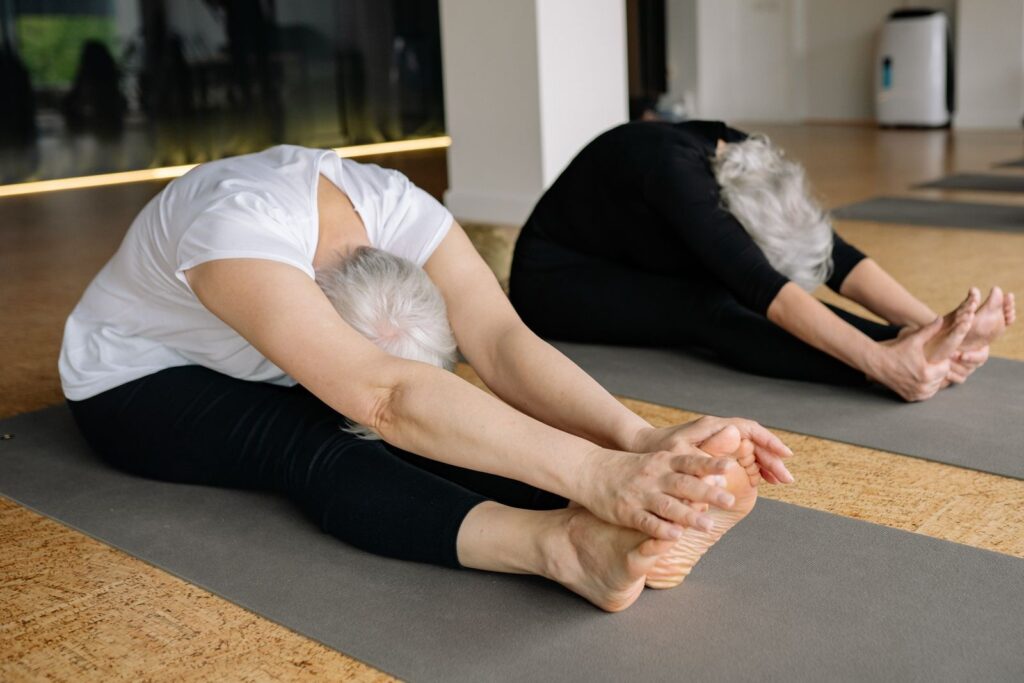
| Back of the thigh (hamstring) | Sit near the chair edge, one leg straight with the heel down, and lean forward from the hips with a straight back. | 15 to 30 seconds each leg | This is already seated |
| Calf | Hold a chair or wall, step one leg back with the heel on the floor, and bend the front knee. | 15 to 30 seconds each leg | Sit, straighten one leg with the heel down and gently pull the toes toward you |
| Ankles | Lift one foot and draw slow circles with your toes, then change direction. | 5 circles each way | Same, seated |
The chest, hamstring and calf stretches follow the three that Harvard shows in its stretching article. The neck, trunk, hip and ankle moves are common gentle options, so check them with a professional if you are unsure.
How often
Harvard says stretching most days, even for a few minutes, gives the best results. A short routine each morning or after a walk is easier to keep than a long one once a week. Keep your other activity going too. CDC lists aerobic activity, strength work on at least two days a week and balance activities. A stretching session can follow a walk or a strength day, because your muscles are already warm.
A short version for busy days
If you only have five minutes, march in place for a minute, then pick three stretches: one for the chest and shoulder, one for the back of the thigh and one for the calf. Hold each for about 15 seconds on each side. A short session still counts as stretching, and Harvard says even a few minutes on most days is helpful.
When to stop and talk to a doctor
MedlinePlus says to stop exercising if you feel pain, dizziness or trouble breathing, and to talk with a physical therapist, nurse or provider before you continue. It also advises older adults and people with medical problems to check with a provider before starting an exercise program.
The sources used here do not list specific conditions. But these are common reasons to ask first:
- A joint replacement, or any recent surgery.
- A bone condition such as osteoporosis, or a past broken bone.
- Dizziness, or a recent fall.
- Pain that does not go away, or pain that gets worse when you stretch.
- A health condition for which you have been given movement limits.
A provider or physical therapist can tell you which stretches are fine for you and which to avoid.
Common mistakes
- Stretching cold. Warm up first and stretch afterward.
- Bouncing. Slow, steady holds are the plan. Bouncing is sudden and hard to control.
- Pushing into pain. A mild pull is the goal. Going further than mild is not the aim.
- Holding your breath. Breathe out slowly as you settle in.
- Rushing the shoulder. Harvard calls for care here, so move slowly.
- Doing only stretches. They are one part of a plan that also includes aerobic, strength and balance work.
- Expecting too much. Stretching helps flexibility. It is not a reliable shield against injury, according to Harvard.
Frequently asked questions
Should I stretch before or after I exercise?
Harvard recommends easy movement like marching or arm circles before exercise, and longer held stretches after, when your muscles are warm.
How long should I hold each stretch?
Harvard cites 10 to 30 seconds, and up to 60 seconds for older adults. A simple start is 15 to 30 seconds per stretch, repeated once or twice. Build up only if it feels comfortable.
Does stretching count toward my weekly exercise minutes?
The CDC pages used here list aerobic, strength and balance activities and do not name stretching. Treat stretching as an addition to those, not a substitute.
Is a chair routine as good as a standing one?
The sources used here do not compare them. A seated routine is a safe place to start, and many stretches in the table above can be done sitting. If balance is a concern, keep a chair or wall within reach.
Before you decide
- Ask your doctor or physical therapist if you have had surgery, a joint replacement, a fracture or dizziness.
- Pick a time you can keep, such as after a walk, and plan on a few minutes.
- Warm up, move slowly, and hold steady.
- Stay at a mild pull. Stop if you have pain, dizziness or trouble breathing.
- Keep your aerobic, strength and balance activity going too.
Sources
- Take time to stretch – Harvard Health (Harvard Health Publishing, August 2024)
- Exercise for Older Adults: MedlinePlus (MedlinePlus, National Library of Medicine, National Institutes of Health)
- Exercises to help prevent falls (MedlinePlus Medical Encyclopedia, National Library of Medicine, National Institutes of Health)
- Older Adult Activity: An Overview | Physical Activity Basics | CDC (Centers for Disease Control and Prevention)
- What Counts as Physical Activity for Older Adults | Physical Activity Basics | CDC (Centers for Disease Control and Prevention)
- Physical Activity Guidelines for Americans (Office of Disease Prevention and Health Promotion, U.S. Department of Health and Human Services)
Last updated: November 2026. This article is general information, not medical advice.