Best By, Use By, Sell By: What Food Date Labels Mean
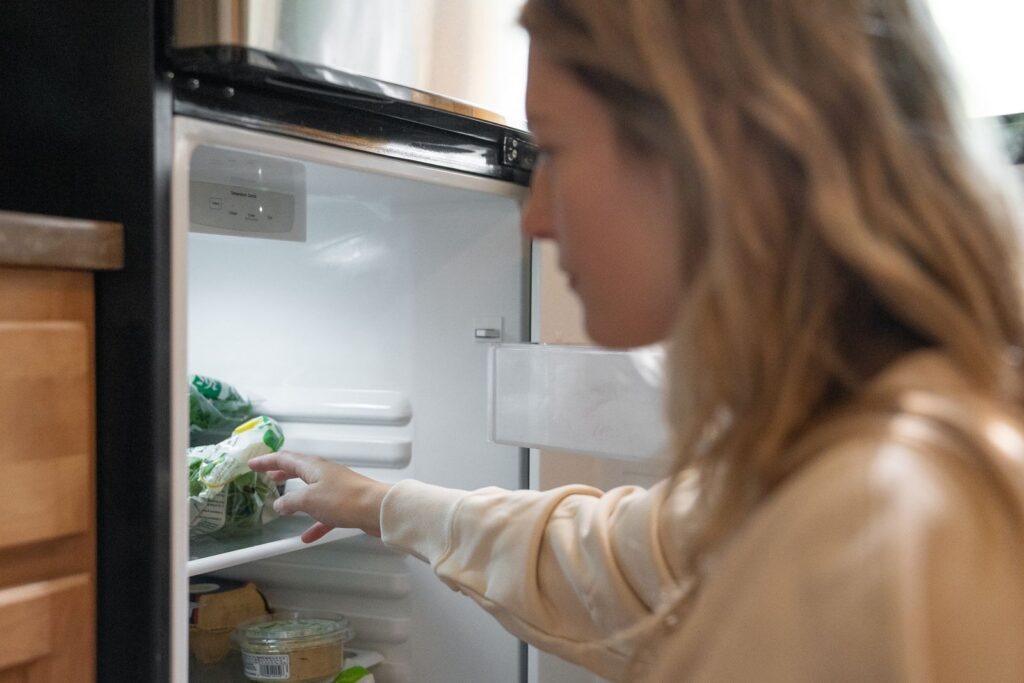
You open the refrigerator on a Sunday evening and find a carton with a date from three days ago. You stand there, door open, wondering whether to keep it or toss it. Most of us have done this. The short answer is that most date labels on food in the United States tell you about quality, not safety. The one main exception is infant formula. For everything else, the date is the maker’s guess about when the food tastes its best, and how you stored the food matters at least as much as the date printed on it.
Key takeaways
- Apart from infant formula, federal rules do not require date labels, and the dates mostly describe quality, not safety.
- Food kept cold enough and handled well is usually still safe after its date, until it shows signs of spoilage.
- Refrigerator storage times are short, and they count from when you bring the food home or cook it.
- Freezing at 0 degrees Fahrenheit works like a pause button: the food stays safe, though quality slowly drops.
- If you are 65 or older, or have a weaker immune system, follow stricter habits and talk with your doctor or a dietitian.
What the date on a food label really tells you
The United States Department of Agriculture (USDA) has a branch that watches over meat, poultry and egg products. It is called the Food Safety and Inspection Service, or FSIS. The Food and Drug Administration (FDA) looks after most other foods. Both agencies say the same basic thing. Except for infant formula, a date on a package is not required by federal regulations.
When a company does choose to print a date, it is there to help shoppers and stores judge when the food will be at its best. It is not an alarm that says “danger after this day.”
Best by, use by, sell by: what each phrase means
As of November 2026, this is how FSIS explains the phrases in common use.
| Label | What it tells you | What to do |
|---|---|---|
| Best if Used By (or Before) | When the product will have its best flavor or quality. Not a purchase or safety date. | Check the food using your eyes and nose, and confirm it has been stored properly. You may eat it after the date if it still seems fine. |
| Sell By | How long the store should display the product. A tool for the store’s stock. Not a safety date. | Buy it before the date if you can, and plan to use it soon after you get home. |
| Use By | The last date recommended for using the product at its peak quality. Not a safety date, except on infant formula. | Use it by this date when you can. Do not buy or use infant formula after its Use By date. |
| Freeze By | When to freeze the product to keep its peak quality. Not a purchase or safety date. | Move it to the freezer by this date if you will not use it before then. |
| Expiration | No uniform meaning. For eggs, an expiration or sell-by date is not a federal rule but may be required by the state. | Treat it like the other dates and rely on storage times and signs of spoilage. For infant formula, follow the Use By date. |
FSIS recommends that companies that choose to use a date pick the phrase “Best if Used By.” The FDA recommends it too. Other phrases, such as “Sell By” or “Use By,” are not prohibited as long as they are truthful and not misleading.
The one big exception: infant formula
Federal rules require a “Use By” date on infant formula. Using the formula by that date ensures it holds each nutrient in the amount listed on the label. FSIS says plainly not to buy or use baby formula after its Use By date.
Is it safe? Looking, smelling and storing
FSIS explains that food kept at proper temperatures should stay safe past its date until spoilage appears. Spoiled food usually develops an off smell, taste or texture. If it has those signs, do not eat it.
That is only half the picture, though. FSIS describes two kinds of bacteria. Spoilage bacteria make food go bad, which shows up as an off taste, smell or texture. Pathogenic bacteria are the kind that can make you ill. Food that has been mishandled, before or after the date, can let those germs multiply quickly. So a food can have a perfect date and still be unsafe if it sat out too long.
FSIS gives an example. Cold chicken salad left out at a picnic above 40 degrees Fahrenheit for more than two hours should not be eaten. If it is 90 degrees or hotter, the limit is one hour.
One more point from FSIS: a change in the color of meat or poultry is not, by itself, a sign of spoilage.
How long common foods keep in your refrigerator and freezer
The federal food safety site, FoodSafety.gov, publishes a Cold Food Storage Chart. Its refrigerator times are for foods kept at 40 degrees Fahrenheit or below, and they are short on purpose. Its freezer times are for quality only. Here is a selection, as reviewed by that site in September 2023.
| Food | Refrigerator (40 F or below) | Freezer (0 F or below) |
|---|---|---|
| Raw eggs in the shell | 3 to 5 weeks | Do not freeze in shell |
| Hard-cooked eggs | 1 week | Do not freeze |
| Ground beef or ground poultry | 1 to 2 days | 3 to 4 months |
| Steaks, chops or roasts (beef, pork, lamb) | 3 to 5 days | 4 to 12 months |
| Fresh chicken or turkey, pieces | 1 to 2 days | 9 months |
| Fresh chicken or turkey, whole | 1 to 2 days | 1 year |
| Deli-sliced luncheon meat | 3 to 5 days | 1 to 2 months |
| Hot dogs, opened package | 1 week | 1 to 2 months |
| Egg, chicken, tuna or macaroni salad | 3 to 4 days | Does not freeze well |
| Soups and stews | 3 to 4 days | 2 to 3 months |
| Cooked meat or poultry leftovers | 3 to 4 days | 2 to 6 months |
| Pizza | 3 to 4 days | 1 to 2 months |
The chart also points readers to FoodKeeper, a tool with storage tips for more than 650 foods and drinks. Notice that these times do not depend on the printed date. Raw ground beef bought on its last “sell by” day still gets only one to two days at home.
Freezing as a pause button
Think of the freezer as a pause button. FSIS says food kept constantly at 0 degrees Fahrenheit will always be safe. Freezing makes germs go dormant, so they stop growing. Only the quality fades with long storage, which is why the freezer times on the chart are for quality only.
A few helpful points from FSIS:
- Freezing does not kill germs for good. Once the food thaws, they can start growing again, so treat thawed food like any other perishable food.
- Freeze food while it is still fresh. It comes out tasting better than food frozen near the end of its life.
- Freezer burn, which shows up as grayish-brown, leathery spots, does not make food unsafe. It only makes it dry. You can trim those parts away.
- Some foods do not freeze well, such as mayonnaise, cream sauces and lettuce.
Reading pack codes and “sell by” dates when you shop
FSIS describes two kinds of dating. Open dating is a calendar date you can read. Closed dating is a code of letters and numbers that records when the product was made. You will see closed codes mostly on cans and boxes.
Can codes are for tracking and recalls. They are not meant for shoppers to decode, so look for a calendar date on the can instead. FSIS says high-acid canned foods, such as tomatoes and fruit, keep their best quality for 12 to 18 months, and low-acid canned foods, such as meats and vegetables, for two to five years.
Egg cartons with the USDA grade shield show a three-digit pack date. It counts the days of the year, so 001 is January 1 and 365 is December 31. If a sell-by date appears on such a carton, it may not be more than 30 days after the pack date. Eggs are best kept in their original carton, on a shelf in the coldest part of the refrigerator and not in the door.
At the store, do not buy cans that are bulging, rusted, leaking or deeply dented. Treat a “Sell By” date as the store’s date, and plan to use the food soon after you bring it home.
Cutting waste without taking chances
The FDA and USDA say that confusion over date labels accounts for about 20 percent of food waste in the home. The USDA estimates that an average family of four spends at least $1,500 each year on food that ends up uneaten. You can keep more of that money without risking your health. Store things correctly, use the oldest food first, and judge by condition and storage time, not by the date alone. In the despensa (the Spanish word for pantry), keep canned and dry goods in a cool, dry place. FSIS says temperatures below 85 degrees Fahrenheit are best.
A kitchen checklist
- Keep the refrigerator at 40 degrees Fahrenheit or below and the freezer at 0 degrees or below. A small appliance thermometer takes the guesswork out.
- Refrigerate perishable food within two hours, or within one hour if it was above 90 degrees outside.
- Write the date you opened or cooked something on the container.
- Put older food at the front and new food at the back.
- Freeze food you will not use in time, while it is still fresh.
- Check the pantry every few weeks.
- Look at and smell the food before you use it, and check how long it has been stored.
When to throw food out
Throw food out if it has an off smell, taste or texture. Throw it out if it sat above 40 degrees Fahrenheit longer than the limits above, or if a can is bulging, leaking, deeply dented or heavily rusted. Surface rust that wipes away is not serious, according to FSIS. Throw out infant formula once its Use By date has passed. And if you cannot be sure how food was stored, the safest choice is to let it go.
For some people, the stakes are higher. FoodSafety.gov says adults aged 65 and older are more likely to be hospitalized or die from foodborne illness. The immune system grows weaker with age, and conditions such as diabetes and cancer can add to the risk. If you are in this group, or you cook for someone who is, stay close to the short refrigerator times and follow the four steps of clean, separate, cook and chill. Your doctor or a registered dietitian can tell you which foods to avoid or limit for your own health.
Frequently asked questions
Is it safe to eat food after the Best By date?
Often, yes. FSIS says foods that show no signs of spoilage should still be wholesome beyond a “Best if Used By” date, provided they were handled and stored properly. Always check the food first.
Does “Use By” mean I must throw the food out that day?
Not usually. FSIS says it is the last day recommended for peak quality, not a safety date, except on infant formula.
Can I freeze food after the date has passed?
If it has been kept cold and shows no spoilage, yes. Freezing does not make spoiled food safe, so freeze it while it is still good.
Why do eggs have a different kind of date?
Egg dates follow state laws, and some states do not allow a sell-by date. See the pack date explanation above.
Before you decide
When you are standing at the open refrigerator, ask three plain questions. How was this food stored? How long has it been here compared with the storage chart? Does it look, smell and feel right? A date is one clue, and it is rarely the most important one. If the answers worry you, or the food is for a baby, an older adult or someone with a weaker immune system, let it go. For questions about meat, poultry or eggs, the USDA Meat and Poultry Hotline is 1-888-674-6854, open weekdays.
Sources
- Food Product Dating, Food Safety and Inspection Service, U.S. Department of Agriculture
- Cold Food Storage Chart, FoodSafety.gov (U.S. government)
- Freezing and Food Safety, Food Safety and Inspection Service, U.S. Department of Agriculture
- Shelf-Stable Food Safety, Food Safety and Inspection Service, U.S. Department of Agriculture
- USDA-FDA Seek Information About Food Date Labeling, Aim is to Provide Further Clarity, Transparency and Cost Savings for U.S. Consumers, U.S. Food and Drug Administration
- People at Risk: Older Adults, FoodSafety.gov (U.S. government)
Last updated: November 2026. This article is general information, not medical advice.