The Blueberry Outbreak Is Over. The Freezer Recall Still Matters.
The E. coli outbreak linked to frozen blueberries was declared over on September 21, 2026. The recalls did not stop there. On October 2, the supplier widened them to cover more Great Value and Trader Joe’s bags, some dated into 2028. A bag can sit in a freezer for a long time, so this is worth a few minutes. As of November 8, 2026, the FDA and CDC pages we opened still showed October 5 as their last update. This article is general food-safety information, not medical advice.
Key takeaways
- CDC reports 17 people sick, 6 in the hospital and no deaths. It closed the investigation on September 21, 2026.
- The recalls name specific products and lots, listed in the table below. They are not a warning about every blueberry.
- If your bag matches, do not eat it. Throw it away or return it to the store for a refund.
- Freezing does not kill most bacteria, so a long time in the freezer is not a safety step.
- Older adults are at higher risk from foodborne illness, so it pays to check.
What happened, in order
The Food and Drug Administration (FDA) and the Centers for Disease Control and Prevention (CDC) tied the illnesses to frozen organic blueberries supplied by Frutas y Hortalizas del Sur S.A., a company in San Carlos, Chile. The germ was E. coli O145, a type that makes a toxin and can cause serious illness.
- July 3, 2026: the company recalled GreenWise Organic IQF Blueberries sold at Publix.
- Late July: Publix recalled all lots of four GreenWise frozen berry items.
- September 2: a recall of Great Value Organic Triple Berry Blend, sold at Walmart, followed. FDA says it was later widened to 26 states and Puerto Rico.
- September 21: CDC declared the outbreak over.
- October 2: more lots were added, including a Trader Joe’s product.
- October 5: FDA and CDC updated their pages.
FDA counts 17 people infected, with illnesses starting between May 11 and early August 2026. Six were hospitalized, and none died. The cases were in Florida and Georgia. Of 13 people interviewed, 11 said they had eaten frozen blueberries.
The recalled products
A “lot code” is a number printed on a package to identify a batch. Compare your bag with the table, then with FDA’s notice itself. The October 2 codes below are copied from FDA’s notice.
| Product | Size | Lot information | Date on package |
|---|---|---|---|
| GreenWise Organic IQF Blueberries (Publix) | 10 oz | Lot 60401 | Best by Feb. 9, 2028 |
| GreenWise Organic Whole Blueberries and Whole Mixed Berries (Publix) | 10 oz and 48 oz | All lots | Any |
| Great Value Frozen Organic Triple Berry Blend (Walmart), recalled Sept. 2 | 10 oz | See the FDA and CDC pages | Best by Feb. 9, 2028 |
| Great Value Organic Triple Berry Blend (Walmart), added Oct. 2 | 10 oz | 6 031 01 and 6 041 01, on the front | Best if used by Jan. 31, 2028 and Feb. 10, 2028 |
| Great Value Organic Blueberries (Walmart), added Oct. 2 | 10 oz | 6 019 01, 6 040 01 and 6 163 01, on the front | Best if used by Jan. 19, 2028, Feb. 9, 2028 and June 12, 2028 |
| Trader Joe’s Organic Mixed Berry Blend, added Oct. 2 | 12 oz | 6 051 01, on the back | Best before Feb. 20, 2028 |
We left out the lot code for the September 2 Great Value recall because FDA and CDC print it with different spacing. Read it on FDA’s page. The October 2 notice says the Great Value bags went to Walmart stores in 30 states and Puerto Rico, and the Trader Joe’s bags went to stores in 26 states and the District of Columbia. FDA regulates this kind of food. The U.S. Department of Agriculture handles meat, poultry and processed egg products, so it is not the agency for this recall.
What to do with berries in your freezer
FDA says to check your home for recalled products, even though the outbreak is over. Throw them away or return them to the place of purchase for a refund. The Great Value and Trader Joe’s notice gives the same advice.
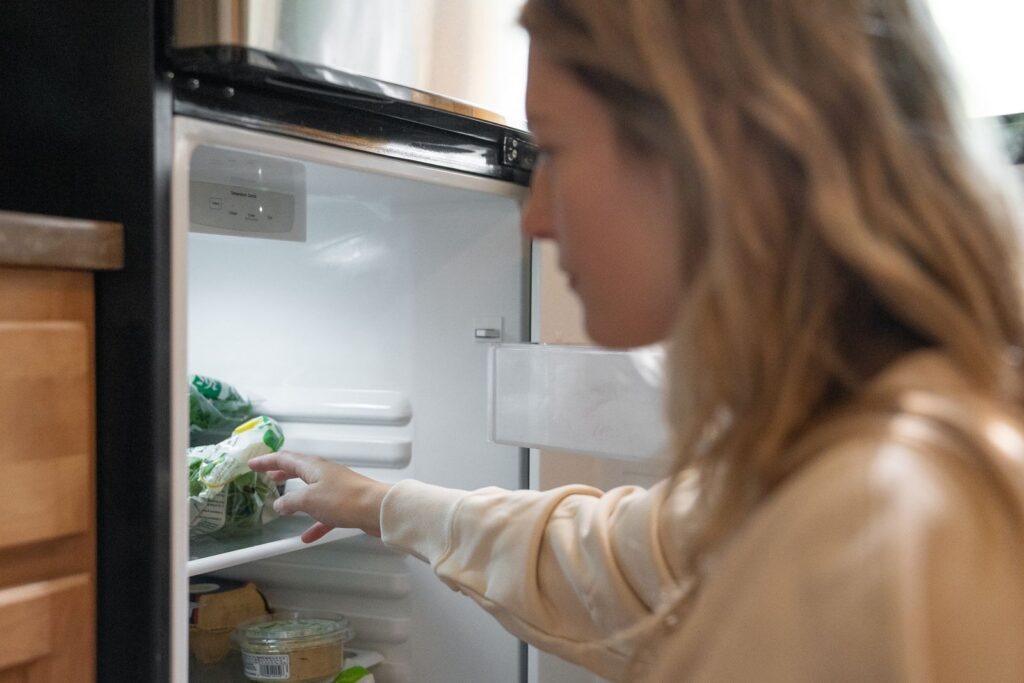
- Open the freezer and find any frozen berry bags from Great Value, Trader Joe’s or GreenWise.
- Read the brand, product, size, lot code and date. FDA says to compare all of these with the notice.
- If everything matches, do not eat or serve it. Do not give it to anyone, including a food bank or a pet.
- Return it to the store, or wrap it securely and put it in the trash.
- Wash the surfaces it touched, then sanitize them with one tablespoon of chlorine bleach per gallon of hot water. Dry with a clean cloth or paper towel.
- Wash your hands with warm water and soap.
If you cannot tell whether a bag matches, FDA’s phone line is 1-888-463-6332. FDA also offers recall alerts by subscription.
Why an ended outbreak is not an all-clear
An outbreak is “over” when investigators stop finding new linked illnesses. A recall is about products that may still be out there. CDC says recalls continued after its investigation closed, and its page directs readers to FDA for the added products.
FDA’s page also reports that the company did not provide all the records FDA asked for, and that FDA added the company to an import alert, so its frozen blueberries may be held at import without a physical exam. It says a sample collected by Publix tested positive for the outbreak strain, while FDA’s own samples of U.S. product were reported negative.
Because freezing does not kill most bacteria, it only stops them from growing, according to FDA’s storage guidance. A bag that has been frozen for months is not safer for it.
Why older adults should take extra care
FDA explains that aging changes how the body handles germs in food. Food may stay longer in the digestive system, giving bacteria more time to grow. The stomach may make less acid, and the liver and kidneys may be less able to clear bacteria and toxins. FDA says the immune system declines from about age 50 to 60 and weakens more after 75.
Symptoms of this E. coli include severe stomach cramps, diarrhea that is sometimes bloody, vomiting, nausea and fever. CDC says they usually start three to four days after swallowing the germ. FDA says they can appear up to nine days later. Most people recover in five to seven days. Some develop hemolytic uremic syndrome, a serious kidney problem that needs hospital care. The recall notice says severe illness is more likely in young children, older adults and people with weakened immune systems.
If you ate a recalled product and feel sick, FDA says to contact a health care provider right away. Talk to your own provider about which foods you should avoid.
Everyday habits that help
CDC’s four steps to food safety apply to every meal:
- Clean: wash hands, utensils and surfaces often, and rinse fruits and vegetables under running water.
- Separate: keep ready-to-eat food apart from raw meat, poultry and seafood.
- Cook: use a food thermometer to check that food reaches a safe temperature.
- Chill: refrigerate perishable food within two hours, or one hour if the room is above 90 degrees Fahrenheit, and thaw food in the refrigerator.
FDA suggests a freezer at 0 degrees Fahrenheit and a refrigerator at or below 40.
Frequently asked questions
Are all frozen blueberries recalled?
No. The notices we read name particular brands, products, sizes and lots. They do not name other brands or fresh berries.
I ate some and feel fine. What now?
FDA says that if you ate a recalled product and have symptoms like those of an E. coli infection, contact a health care provider right away. Symptoms can take days to appear.
Can I cook the berries to make them safe?
FDA’s advice is not to eat recalled products. Discard them or return them. The notices do not offer cooking as an option.
My bag is dated 2028. Is it still affected?
It can be. Several recalled lots have best-by dates in 2028. A far-off date does not cancel a recall.
Before you decide
You do not need to throw out every bag of frozen fruit. You do need to check the bags from these brands. If one matches, handle it as FDA describes, clean up, and tell family or neighbors who may have bought the same bags.
Sources
- Outbreak Investigation of E. coli O145:H28: Frozen Blueberries (July 2026) (U.S. Food and Drug Administration, updated October 5, 2026)
- Frutas y Hortalizas del Sur S.A. Expands Recalls to Include Additional Lots of Great Value Frozen Organic Triple Berry Blend 10 OZ, Great Value Frozen Organic Blueberries 10 OZ and One Lot of Trader Joe’s Frozen Organic Mixed Berry Blend 12 OZ Because of Potential Contamination with E. coli O145 (U.S. Food and Drug Administration, October 2, 2026)
- E. coli Outbreak Linked to Frozen Blueberries (Centers for Disease Control and Prevention, updated October 5, 2026)
- Food Recalls: What You Need to Know (U.S. Food and Drug Administration)
- Food Safety for Older Adults and People with Cancer, Diabetes, HIV/AIDS, Organ Transplants, and Autoimmune Diseases (U.S. Food and Drug Administration)
- Are You Storing Food Safely? (U.S. Food and Drug Administration)
Last updated: November 2026. This article is general food-safety information, not medical advice.