Why Short Breaks Improve Focus
Most of us know the feeling. You have been reading, sewing or working at a screen for a long stretch, and the words stop sinking in. A short pause can help, but the research is more modest than the headlines suggest. This guide explains what studies and health bodies found, which breaks are worth trying, and how to fit them into an ordinary day safely.
Key takeaways
- A review of 22 groups of people found that breaks of ten minutes or less gave a small lift in energy and a small drop in tiredness, but no clear gain in task performance.
- A small 2021 Microsoft experiment found a stress-linked brain signal climbed across back-to-back video meetings and stayed steadier with ten-minute breaks.
- Good breaks take you away from the task: stand, walk, stretch, rest your eyes.
- No one has proved a perfect schedule. Treat the times here as starting points to try.
- Move gently. If a break makes you dizzy or causes pain, stop and speak to your doctor.
What the research says about short breaks
A large review of “micro-breaks”
Researchers call a pause of ten minutes or less a “micro-break”. In 2022 a team led by Albulescu published a meta-analysis in the journal PLOS ONE. A meta-analysis gathers many separate studies and works out what they show together. This one covered 22 groups of people, 2,335 participants in all, with breaks lasting from a few seconds to ten minutes.
The effects were small. People who took micro-breaks rated themselves a little more energetic and a little less tired. For how well people did their tasks, the combined result was too uncertain to count as a real effect, though breaks did not seem to make performance worse. Gains appeared after creative tasks, and after routine clerical tasks too, though that finding rests on only two studies. After mentally demanding work, no clear gain appeared. Longer breaks were linked with better task results.
Be careful about how far this applies to you. The average age was about 31, roughly half the participants were students, and tiredness was self-reported, meaning people simply rated how they felt. Only four of the 22 studies were judged low risk of bias on every measure. The authors did not compare walking with stretching or resting, because the studies were too different. Their reading was that almost any activity that lets you detach from the task seems to help how you feel.
The Microsoft study of back-to-back meetings
In 2021 Microsoft’s Human Factors Lab described a small experiment. Fourteen people wore EEG caps, which record the brain’s electrical activity, during video meetings. On one day they sat through four half-hour meetings in a row. On another day, a week apart, they had the same meetings with ten-minute breaks between them, spent on a guided meditation. Half the group did the two days in the opposite order.
Microsoft reported that a stress-linked brain signal rose across the two hours without breaks and stayed roughly level with them. A signal linked to engagement suggested people were more switched on with breaks. Stress also spiked at the end of one meeting and the start of the next when there was no gap.
Treat this as a hint, not proof. Only 14 people took part, the company ran the study itself, and its article also promotes Microsoft’s own meeting-scheduling settings. Every break was meditation, so it cannot tell us whether a walk would work as well.
Resting your eyes, and sitting less
The American Academy of Ophthalmology notes that people blink much less at screens, which can leave eyes dry, tired or blurry. It suggests the 20-20-20 habit: every 20 minutes, look at something at least 20 feet (about 6 metres) away for at least 20 seconds. The page we read presents this as a practical habit, not with trial evidence for the exact numbers, so think of it as a handy reminder rather than a precise formula.
The World Health Organization (WHO) advises everyone to limit sedentary time, meaning low-energy time spent sitting or lying down while awake. It links long sitting with higher rates of heart disease, cancer and type 2 diabetes, and says people who must sit a lot should do more physical activity to offset the harm. The WHO pages we read give no set number of minutes between standing breaks. For adults 65 and over, WHO recommends adding balance and strength activities to help prevent falls. The US Centers for Disease Control and Prevention (CDC) suggests balance moves such as walking heel to toe or standing up from a chair, while staying as active as your abilities and health allow.
Which breaks tend to help, and which do not
The research does not crown one best break, so here is a sensible reading of it.
- Standing and walking. Fits the WHO message to sit less and move more, and is easy anywhere.
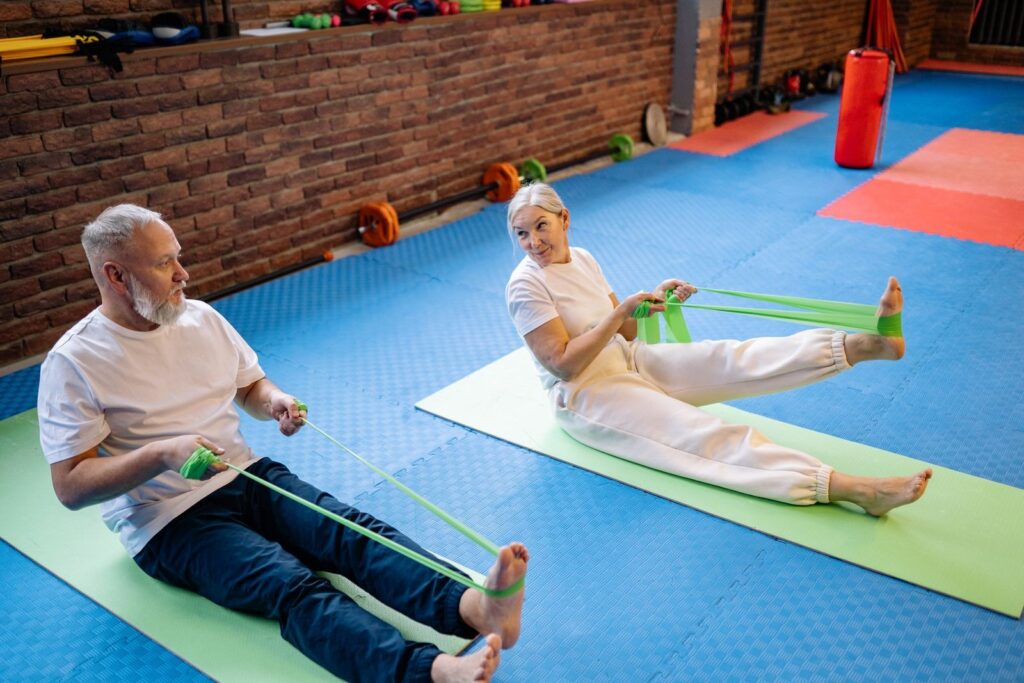
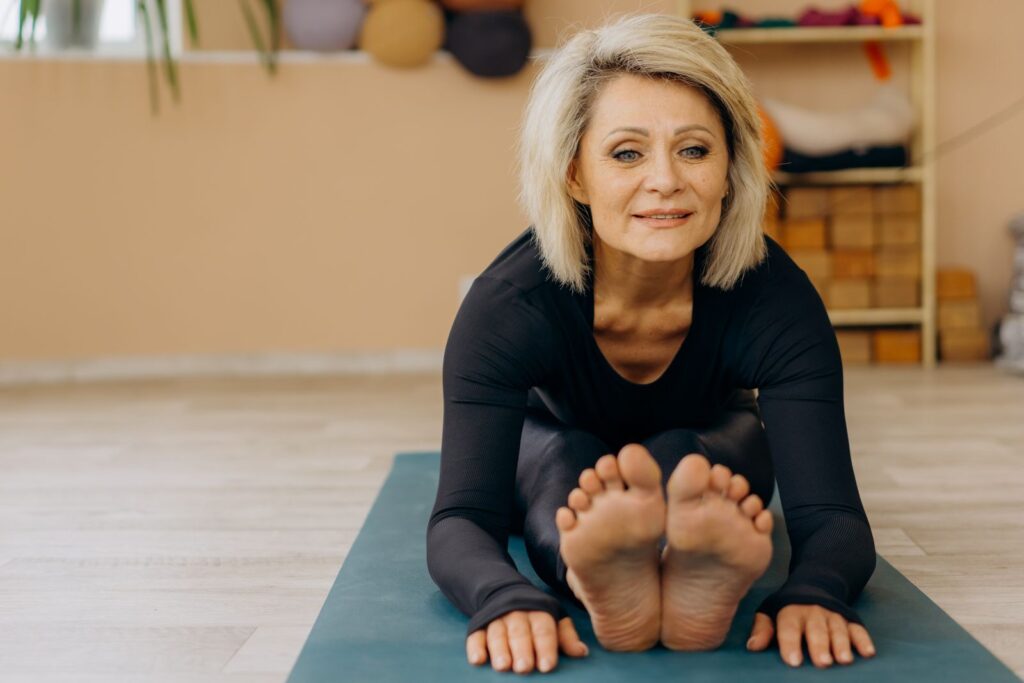
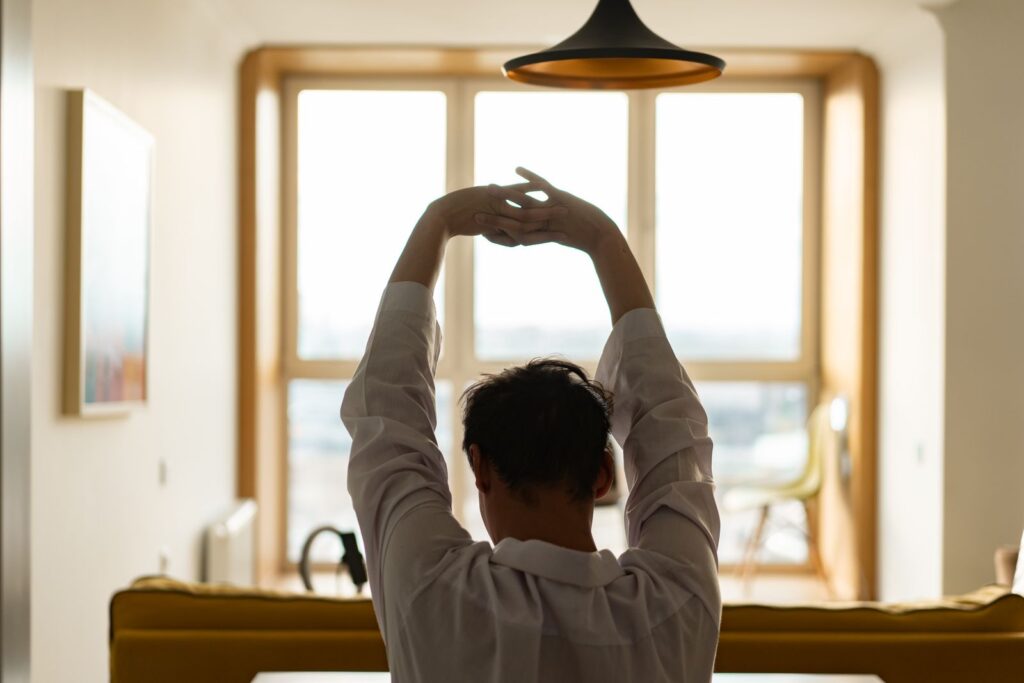
- Gentle stretching. Eases stiffness from holding one position. Keep it comfortable.
- Looking away. Rests your eyes from close work.
- Quiet rest. Microsoft’s breaks used guided meditation. Sitting quietly by a window or breathing slowly is a similar idea.
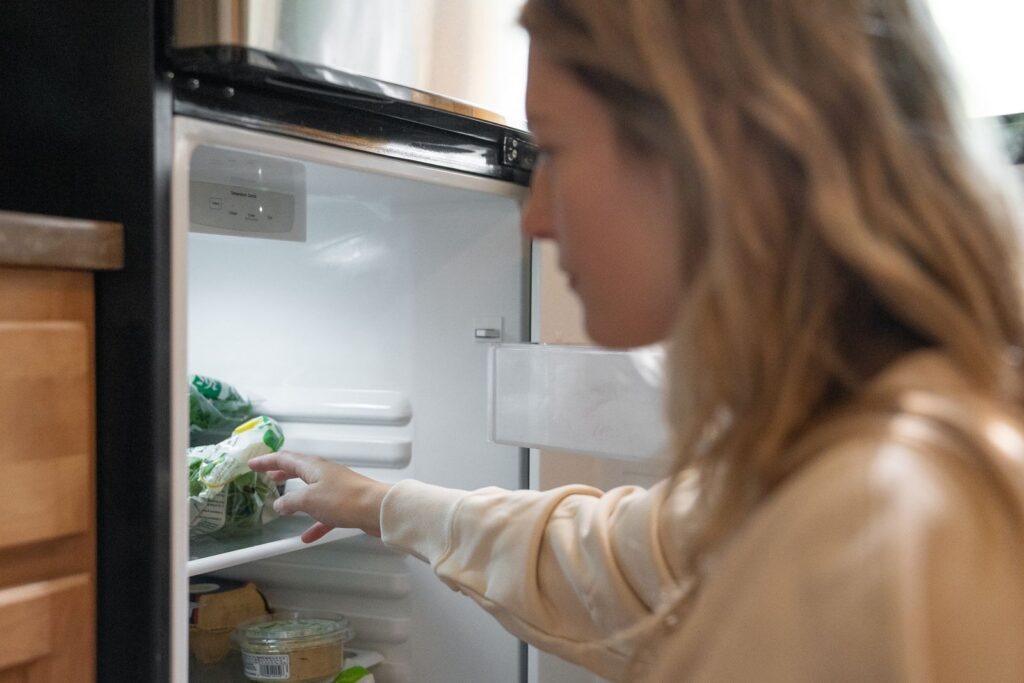
- A drink of water. The sources we used do not show that water sharpens thinking. Its value is a pleasant reason to get up.
What does not help much? Skipping breaks entirely: in the Microsoft study, the stress signal rose when there were none. A “break” that keeps the same demands going, such as checking work email, is another poor choice. Scrolling a phone was not tested in the studies we read. Because it keeps your eyes on a screen and your mind busy, we suggest something else.
How long and how often
The review looked at pauses of up to ten minutes, and Microsoft used ten-minute gaps between meetings. Beyond that, nobody has set a proven timetable. The table mixes what the sources say with our own starting points, marked as suggestions.
| Break | How long | Good for |
|---|---|---|
| Look at something far away | 20 seconds, every 20 minutes of screen time (eye specialists’ guideline) | Resting tired, dry eyes |
| Stand up and walk around the house | 2 to 5 minutes, about once an hour (our suggestion) | Breaking up long sitting |
| Gentle stretch beside a sturdy counter | 1 to 3 minutes (our suggestion) | Stiff neck, shoulders and back |
| Quiet sitting or slow breathing | 5 to 10 minutes between demanding tasks | Winding down, a fresh start |
| Drink of water | 1 to 2 minutes (our suggestion) | A reason to stand and move |
A gentle plan for your day
A day at home
Tie breaks to things you already do. Stand when the kettle boils, at the end of a television programme, or after a phone call. Walk to a window or once around the house. A routine is easier than watching the clock.
Gardening, crafts or reading
Every 20 to 30 minutes (our suggestion), stop, straighten up slowly and look at the far end of the garden or out of a window. The same eye rest suits reading and sewing. Sip some water, and change position before you go back.
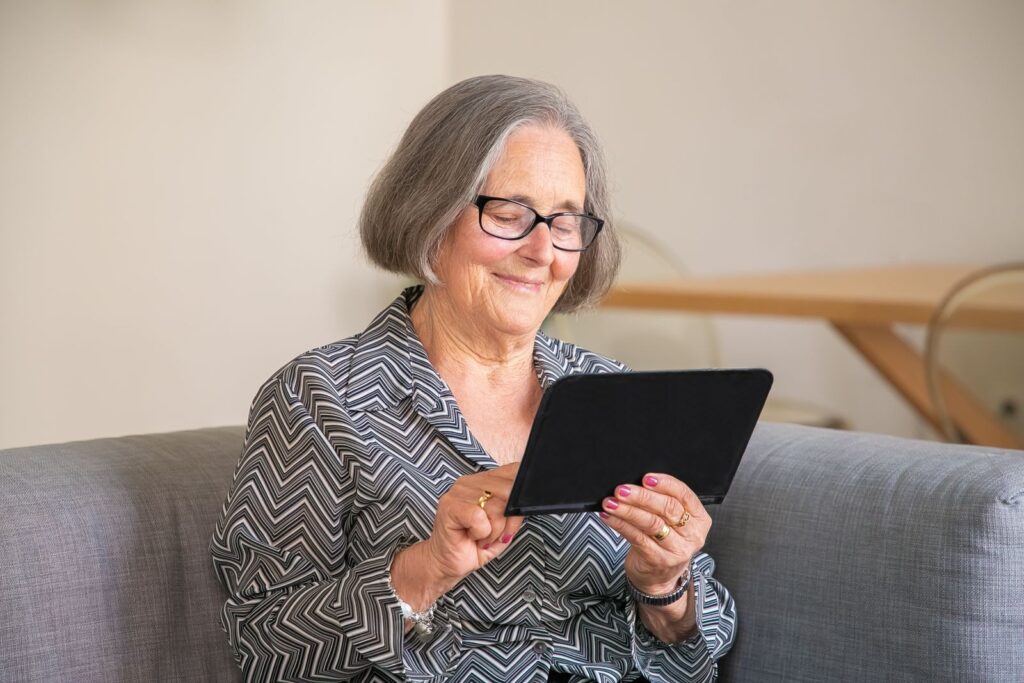
At a computer or tablet
Use the 20-20-20 habit and stand at least once an hour. On video calls, leave a few minutes between meetings if you can. The ophthalmologists also advise keeping room lighting no brighter than the screen, and using artificial tears if eyes feel dry. See an eye doctor if your eyes are often red, watery or blurry, or become painful.
Safety notes
- Balance. Stand next to a sturdy surface, wear steady shoes, keep the floor clear, and get up slowly. Supported balance moves make a useful break, since WHO and CDC both stress balance.
- Joints. A stretch should feel mild. Stop if you feel sharp pain.
- Ask your doctor before starting if you often feel dizzy, have a heart or lung condition, weak bones or a recent operation, or take medicines that make you light-headed.
- Get urgent help for chest pain, severe breathlessness or fainting.
A quick checklist
- I have chosen one or two breaks to try this week.
- I have linked each to something I already do.
- I can reach a counter or chair if I feel unsteady.
- I know when I would stop and call my doctor.
Common mistakes
- Waiting until you are exhausted before stopping.
- Swapping one screen for another.
- Stretching hard or standing up too quickly.
- Pushing through pain.
- Expecting a dramatic change; the gains are modest.
Frequently asked questions
Will a short break make me think better?
You will probably feel fresher. The review found small gains in energy and tiredness, but no clear improvement in task performance overall.
Is five minutes enough?
It is a reasonable start. The studies covered breaks from a few seconds up to ten minutes, and longer breaks did better for task results.
Does looking at my phone count as a break?
The studies we read did not test it. Rest that takes you away from the screen and the task is the safer choice.
I have a bad knee or poor balance. Can I still take breaks?
Yes. Stretch while seated, or look away and breathe slowly. Ask your doctor which movements suit you.
Before you decide
Pick one break and try it for a week, then adjust. If you have a health condition, ask your doctor what is safe for you.
Sources
- Give me a break! A systematic review and meta-analysis on the efficacy of micro-breaks for increasing well-being and performance – PLOS ONE (via PubMed Central)
- Research Proves Your Brain Needs Breaks – Microsoft WorkLab
- Can Reading a Smartphone With One Eye Lead to Temporary Blindness? – American Academy of Ophthalmology (used for the 20-20-20 guidance and eye-strain advice)
- Every move counts towards better health – says WHO – World Health Organization
- Physical activity – World Health Organization fact sheet
- Older Adult Activity: An Overview – Centers for Disease Control and Prevention
Last updated: November 2026. This article is general information, not medical or insurance advice.