Balance Exercises at Home: A Gentle, Safe Routine for Lower Fall Risk
Better balance is one of the most practical things a person over 55 can work on, and much of it can be done in a kitchen, next to a sturdy counter or chair. U.S. health agencies describe a simple pattern: exercises that strengthen the legs and train balance, a safer home, and a review of medicines and eyesight with your own clinicians. This guide walks through a gentle routine built from CDC and National Library of Medicine (NLM, part of the National Institutes of Health) advice. It explains how to set up your space, how to progress slowly, how often to practice, and the signs that mean you should stop and call a professional first.
Key takeaways
- More than one in four older people falls each year, but fewer than half tell their doctor, according to the CDC.
- The CDC says adults 65 and older should include balance activities, plus muscle-strengthening on at least 2 days a week, in their usual weekly activity.
- Always hold a solid support for standing exercises, and stop if you feel pain, dizziness or trouble breathing.
- Check with your doctor or physical therapist before you start, especially if you have a medical condition or have already fallen.
- Exercise works best together with safer floors and lighting, current glasses, comfortable shoes and a medicine review.
Why balance practice matters
The CDC reports that about 4.5 million emergency department visits each year are for falls among adults 65 and older. Of those, about 3.1 million people are treated and sent home, and about 1.4 million are admitted to the hospital. Falls also cause most hip fractures: the CDC attributes 83 percent of hip fracture deaths to falls, and says nearly 319,000 older people are hospitalized each year for a hip fracture.
There is also a quieter effect. The CDC notes that a person who has fallen once has double the chance of falling again, and that fear of falling can lead people to cut back on daily activities. Doing less makes the legs weaker, which raises the risk further. Gentle, regular practice is one way to break that cycle.
The CDC lists common risk factors that can be changed: weak legs, low vitamin D, problems with walking and balance, certain medicines, vision problems, foot pain or poor footwear, and hazards at home such as uneven steps and throw rugs. Exercise addresses only some of these, which is why the sections below also cover the rest.
Before you start: talk to a professional
MedlinePlus, the NLM’s health information service, advises checking with your health care provider before starting, especially if you have a medical problem or are an older adult at risk of falls. The CDC also suggests asking your doctor how conditions such as arthritis, diabetes or heart disease affect the amount and type of activity that is right for you. A physical therapist can show you each movement in person and set a safe starting level.
Ask for help sooner rather than later if any of the following is true. The National Institute on Deafness and Other Communication Disorders (NIDCD) says to talk to your doctor if you feel unsteady, if the room seems to spin even briefly, if you feel lightheaded or as if you might faint, if you have lost your balance or fallen, or if your vision is blurred or you feel disoriented. These can be signs of a balance disorder or another condition that needs checking, and exercise alone will not fix them.
When you see your doctor, NIDCD suggests bringing details: when and where you fell and how many times, how often dizziness happens and how long it lasts, and a full list of everything you take, including over-the-counter products and supplements, with doses and the reason for each.
Set up your space
Choose a spot where a mistake will not hurt. Follow this checklist before every session.
- Pick a solid support. Use a heavy kitchen counter or a sturdy chair with a straight back. MedlinePlus says to use a solid support for standing exercises. A wheeled chair, a light table or a loose towel rail is not safe.
- Clear the floor. The CDC advises removing things you could trip over. Move cords, shoes and small rugs out of the way.
- Turn the lights on. The CDC suggests brighter bulbs and good lighting throughout the home. NIDCD advises avoiding walking in the dark.
- Wear steady shoes or non-slip footwear. NIDCD recommends low-heeled or walking shoes for walking outdoors, and the CDC has a fact sheet on feet and footwear. Avoid loose slippers and socks on a slick floor.
- Have another person nearby at first if you feel unsure, or keep a phone within reach.
- Remember to breathe. MedlinePlus says to breathe slowly and easily and not hold your breath.
A gentle sequence to try
The movements below come from NLM and CDC descriptions of balance and leg-strengthening exercises. Go slowly, stay close to your support, and do only what feels steady. Stop any move that hurts.
1. Sit to stand from a chair
Both the CDC and MedlinePlus mention standing up from a sitting position as a balance and strength activity. MedlinePlus describes sitting down and standing up without using your hands as an everyday habit. If that is too hard, start by using your hands and work toward needing them less. The CDC also publishes a one-page Chair Rise Exercise handout with its fall-prevention materials that you can ask your clinician about.
2. Toe stands
Hold a solid support, keep your back straight and knees slightly bent, and rise onto your toes as high as is comfortable. Lower your heels slowly. MedlinePlus lists 10 to 15 repetitions for this exercise, which works the calves and ankles.
3. Knee curls
Hold your support with feet about shoulder-width apart and knees slightly bent. Lift one leg back and bend the knee to bring the heel toward your buttock, then lower slowly. MedlinePlus lists 10 to 15 repetitions on each leg.
4. Standing on one foot
Standing on one foot is the example the CDC gives for balance activity, and MedlinePlus suggests doing it while waiting in line. At home, do it beside the counter with a hand ready to hold. Lift one foot slightly and stand as long as it feels steady, then switch. The sources do not set a time, so build up gradually and let your clinician guide you.
5. Heel-to-toe walking
The CDC names heel-to-toe walking as a balance activity. Place the heel of one foot directly in front of the toes of the other, as if walking on a line. Do it along a hallway wall or counter so you can touch it, and keep your eyes forward.
How often, and how to make it harder
The CDC’s guidelines for adults 65 and older say to include balance activities alongside aerobic activity (at least 150 minutes a week of moderate activity, such as brisk walking) and muscle-strengthening on at least 2 days a week. The sources I reviewed do not give one exact number of balance sessions that suits everyone. A practical approach is to attach balance work to your strength days, then ask your clinician or physical therapist whether to do more.
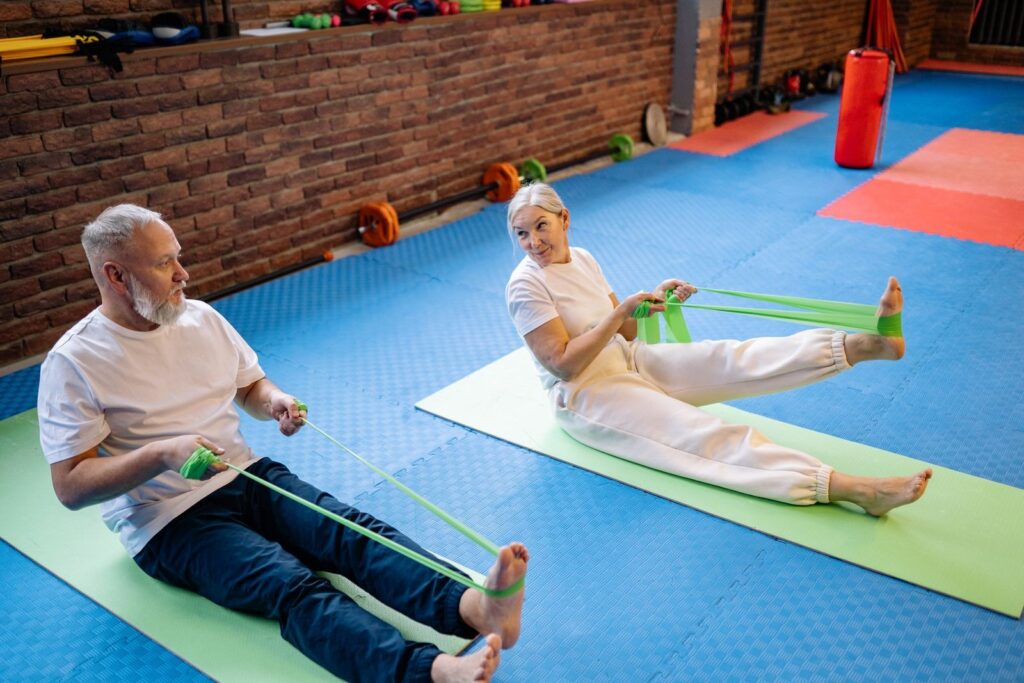
Start slowly. MedlinePlus says that as you get stronger, you can hold positions longer or add light ankle weights, and that walking can progress to uneven ground such as sand or gravel, with a stick or walker for support if needed. Tai chi and simple pool exercises can also help. The CDC specifically names tai chi as an example of exercise that builds leg strength and balance. Make changes one at a time, and ask a professional before adding weights or changing surfaces.
After an illness or a break, the CDC advises restarting at a lower level and building back up gradually. Some days will feel worse than others. The CDC also notes that some physical activity is better than none, and that you should be as active as your abilities and conditions allow.
Stop and get help if
| What you notice | What to do |
|---|---|
| Pain during or after an exercise | Stop. MedlinePlus says to talk with your physical therapist, nurse or provider before continuing. |
| Dizziness or lightheadedness | Stop and sit down. Tell your provider before you continue exercising. |
| Trouble breathing | Stop. Discuss it with your provider before continuing. |
| Dizziness, spinning or unsteadiness that comes back often | Make an appointment. MedlinePlus says frequent dizziness or imbalance can signal another condition. |
| You fall, even if you feel fine afterward | Tell your doctor. The CDC says many people with a fall do not report it. |
| You faint, or symptoms are sudden and severe | Seek medical care promptly. |
Beyond exercise: the rest of the plan
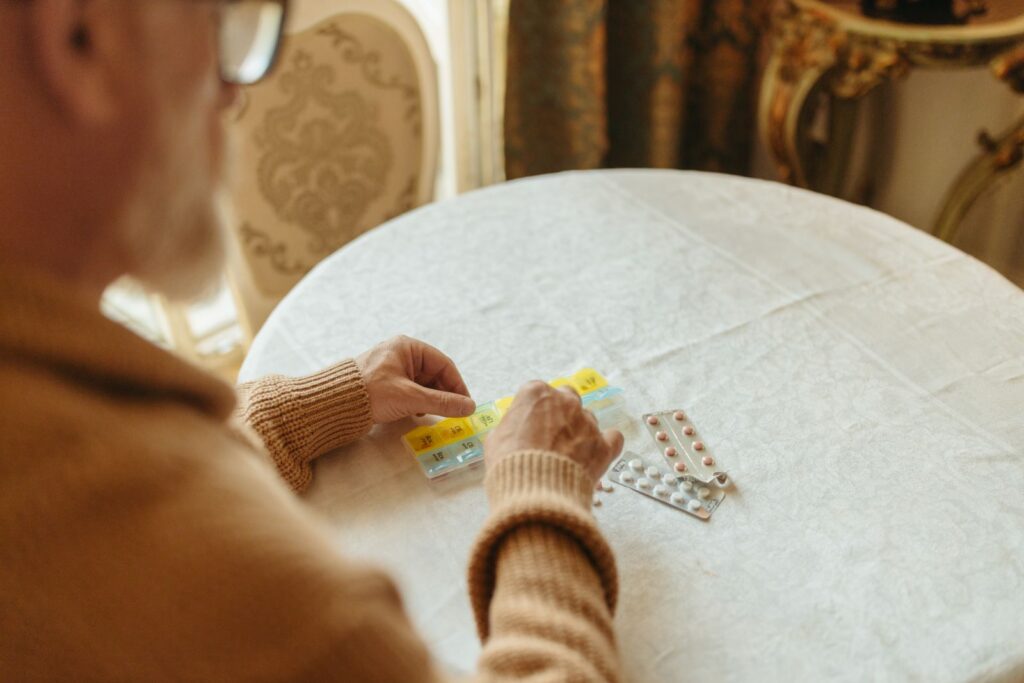
- Medicines. The CDC says to ask your doctor or pharmacist to review all your medicines, including over-the-counter ones, for any that can cause dizziness or drowsiness.
- Vision. The CDC advises seeing an eye doctor at least once a year and keeping glasses up to date. If you wear bifocal or progressive lenses, ask about a distance-only pair for walking outdoors.
- Bones. The CDC suggests asking your doctor about vitamin D supplements and about screening for osteoporosis.
- Home. The CDC lists grab bars in or near the tub, shower and toilet, railings on both sides of stairs, and brighter lighting.
- Screening. The NLM says adults 65 and older may get a simple balance screening even without symptoms, so ask at your next checkup.
Frequently asked questions
Can I do these if I already use a cane or walker?
Possibly, but ask your clinician first. MedlinePlus notes that walking exercises can use a walking stick or walker for support. A physical therapist can adjust each movement to your aid.
Is it dangerous to practice standing on one foot?
It carries some risk if done without support. That is why the sources stress holding a solid support for standing exercises. Keep a counter or chair within reach, and have someone nearby if you feel unsure.
Do I need special equipment?
No. The exercises above need a sturdy chair or counter and comfortable shoes. Ankle weights are optional later, and you should ask a professional before adding them.
I have not fallen. Should I still do this?
The CDC includes balance activities in its general weekly guidance for adults 65 and older, whether or not a fall has happened. Check with your doctor first if you have health conditions.
Before you decide
You do not have to do everything at once. Pick one change this week, such as clearing a hallway or adding toe stands beside the counter, and book a visit to talk about medicines, vision and balance. If you feel unsteady or have fallen, a physical therapist can teach you a program matched to you. Free tools exist too: the CDC points to the National Council on Aging’s Falls Free CheckUp questionnaire and other resources through its falls and STEADI pages.
Sources
- Older Adult Fall Prevention: Facts and Stats (Centers for Disease Control and Prevention)
- About Older Adult Falls (Centers for Disease Control and Prevention)
- Fall prevention steps (Centers for Disease Control and Prevention)
- Older Adult Activity: An Overview (Centers for Disease Control and Prevention)
- Adding Physical Activity as an Older Adult (Centers for Disease Control and Prevention)
- STEADI patient and caregiver resources (Centers for Disease Control and Prevention)
- Exercises to help prevent falls (MedlinePlus, National Library of Medicine)
- Balance Tests (MedlinePlus, National Library of Medicine)
- Balance Problems (MedlinePlus, National Library of Medicine)
- Balance Disorders (National Institute on Deafness and Other Communication Disorders, NIH)
Last updated: November 2026. This article is general information, not medical advice; talk to your doctor or physical therapist before starting any exercise program.