Over-the-Counter Hearing Aids: What to Check Before You Buy
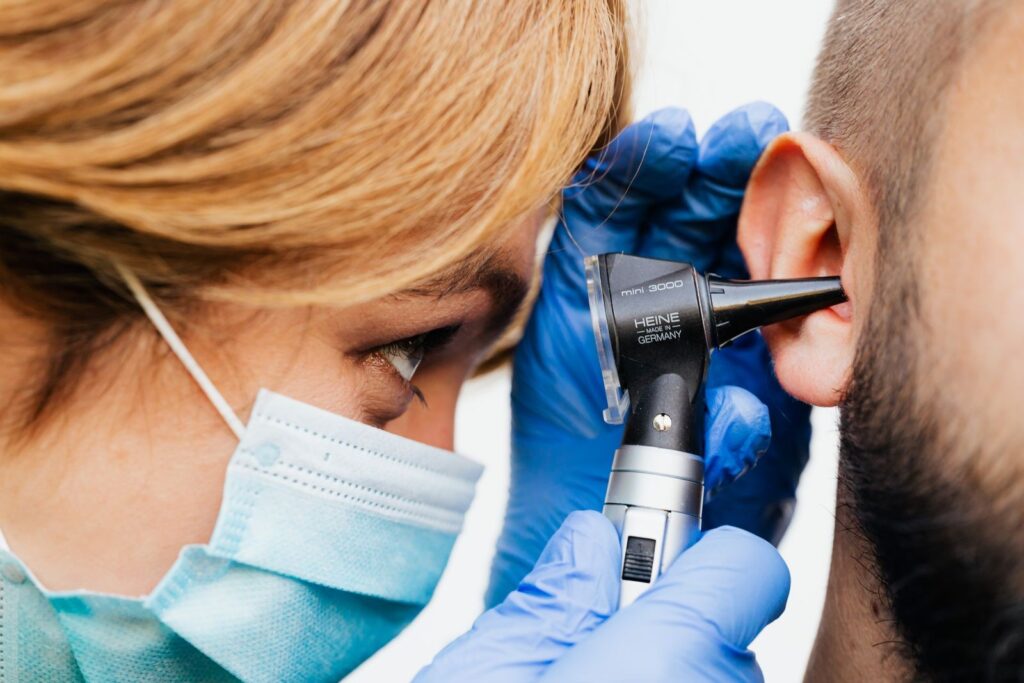
Since October 2022, adults in the United States can buy certain hearing aids in a store or online without a prescription or a hearing test. These are called over-the-counter (OTC) hearing aids. They can cost much less than prescription models, but they are made for a specific kind of hearing loss. This guide explains what the rule allows, who should see a professional first, what to compare before you buy, how Medicare fits in, and how to spot claims that go too far.
Key takeaways
- OTC hearing aids are for adults 18 and older with perceived mild to moderate hearing loss. They are not for severe loss or for children.
- Some problems need a medical check first, such as sudden hearing change, trouble in one ear, dizziness, ear pain or drainage.
- Prices vary widely. Consumer Reports found some preset models near $100 a pair and self-fitting models from about $500 a pair.
- Original Medicare does not pay for hearing aids. Some Medicare Advantage plans help.
- Before you buy, check the return window, fit, battery, app needs, support and warranty.
What the FDA rule allows
The Food and Drug Administration (FDA), the federal agency that regulates medical devices, created the OTC category. It took effect on October 17, 2022. OTC hearing aids are for adults 18 and older who perceive mild to moderate hearing loss, meaning they notice it themselves. You can buy them in stores or online with no exam, prescription or fitting by a professional.
They are not meant for severe or profound hearing loss, because their sound output is limited. They are also not for anyone under 18, who needs a prescription and a doctor’s visit.
Two kinds of OTC aids
Some models are basic, with volume control and preset programs. Self-fitting models let you adjust sound through a built-in hearing test, software or a smartphone app.
How prescription aids differ
Prescription hearing aids are every other kind. A licensed hearing health professional sells them and programs them for your hearing loss. They can suit any age and any level of loss.
Who should see a professional first
Age-related hearing loss usually comes on slowly and affects both ears, so it is easy to miss. The National Institute on Deafness and Other Communication Disorders (NIDCD) says about one in three people ages 65 to 74 has hearing loss, and nearly half of people older than 75 have trouble hearing. NIDCD also offers a 10-question self-check. Answering “yes” to two or more questions, or “sometimes” to three or more, suggests it is worth getting a hearing test.
An audiologist is a hearing specialist. An ENT doctor, also called an otolaryngologist, treats ear, nose and throat conditions. The FDA says to see a doctor, preferably an ENT, before buying if you have any of these:
- A sudden change in hearing in the past 6 months, or hearing that comes and goes.
- Hearing that is worse in one ear, or ringing or buzzing in only one ear.
- Severe dizziness or a spinning feeling.
- Ear pain or discomfort.
- Blood, pus or fluid from the ear in the past 6 months.
- Heavy earwax or a suspected object in the ear.
- A birth defect, injury or unusual shape of the ear.
Sudden hearing loss is urgent. NIDCD says to see a doctor right away, because waiting can make treatment less effective.
Also seek professional help if you cannot hear speech in a quiet room, have trouble hearing loud sounds, or find an OTC device does not help enough. Your loss may be more than mild to moderate. Some people simply prefer expert fitting and follow-up adjustments, which is also reasonable.
What hearing aids cost, and what Medicare covers
| Question | OTC hearing aids | Prescription hearing aids |
|---|---|---|
| Who they are for | Adults 18 and older with perceived mild to moderate loss | Any age, any level of loss |
| How you buy | Store or online, no exam needed | Through a licensed hearing health professional |
| Setup | You set up, often with an app | A professional programs them for you |
| Price per pair (Consumer Reports, early 2026) | About $100 for some preset models; about $500 and up for self-fitting, a few near $2,000 or more | About $1,500 to more than $7,000 |
| Trial period | Set by each seller; read the box | Most states require at least 30 days |
Prices change often, so treat these as a snapshot. The Federal Trade Commission (FTC) advises that a higher price does not guarantee better features, and that unusually low prices deserve caution.
Medicare coverage reality
Original Medicare does not pay for hearing aids or for exams to fit them. Part B does cover diagnostic hearing and balance exams when a doctor or other provider orders them to find out whether you need medical treatment. After the Part B deductible, you generally pay 20% of the Medicare-approved amount.
Some Medicare Advantage plans offer hearing benefits. KFF found that in 2026, about 95% of people in individual Medicare Advantage plans were in plans that offer hearing exams, hearing aids or both. An older KFF analysis found that yearly dollar caps or limits of one set per year are common. Ask a plan whether it pays toward an OTC device or only toward a prescription model. NIDCD adds that some nonprofit groups help with costs.
What to check before you buy
Read the outside of the box. The FDA requires OTC packaging to say “OTC” and “hearing aid,” name the battery type, say whether you need a phone or remote, and state the return policy or say there is none.
Return window and trial period
AARP’s guide advises at least 30 days and quotes an expert who recommends at least 45, since adjusting takes weeks. NIDCD says most manufacturers offer 30 to 60 days. Ask which fees you would not get back.
Fit and comfort
Try the different tips or domes in the box. Behind-the-ear and in-ear styles both exist. Consumer Reports notes that smaller devices can be harder to handle and clean.
Battery or rechargeable
Rechargeable models usually cost more, while cheaper ones need new batteries from time to time. Choose a power source that lasts your waking hours.
App and phone needs
Many OTC aids need a smartphone app, and some work only with certain phones. Check the box, and ask whether you can adjust the aids without a phone.
Customer support and warranty
Ask what help you get after the trial ends and what it costs to replace a lost or damaged aid. Some local audiologists help set up OTC devices for a fee. The FDA does not require a warranty, so ask how long it lasts and what it covers.
Your checklist
- The box says “OTC” and “hearing aid.”
- The return window is at least 30 days, and I know which fees are not refundable.
- I tried different tips and the fit is comfortable.
- I know the battery type or charging routine.
- My phone works with the app, or I do not need one.
- I know who to call for help.
- I know the warranty length and what it covers.
- I have no warning sign that calls for a medical check first.
Your first weeks, and how to spot overclaims
The first weeks
Expect an adjustment period. AARP says it can take several weeks to judge whether aids work, because your brain must get used to new sounds. NIDCD lists common early issues: discomfort, a plugged-up sound to your own voice that usually fades, whistling that often comes from poor fit or earwax, background noise, and buzzing near cell phones.
Wear them regularly in different places, such as restaurants and meetings. Keep them away from heat and moisture, clean them as directed, turn them off when not in use, and keep batteries and small aids away from children and pets.
If you notice ear irritation, an overheated battery or a sudden drop in hearing, stop using the device, see a doctor, and report it to the FDA through MedWatch or at 1-800-FDA-1088.
Overclaims and scams
- A personal sound amplifier is not a hearing aid. The FDA says these products are for people with normal hearing and are not medical devices. The FTC says only hearing aids are designed to make up for impaired hearing.
- The FTC settled with a company that claimed hearing-aid-like benefits for an amplifier without evidence and falsely cited studies.
- “FDA Registered” or “FDA Certified” claims, or use of the FDA logo, may be misleading.
- Choose a seller with a good reputation, and check reviews or ask for referrals.
Frequently asked questions
Do I need a hearing test before buying?
No. The FDA says you can buy without an exam, prescription or fitting. You can still get a test from an audiologist, ask for your records and buy elsewhere.
Is a sound amplifier the same as an OTC hearing aid?
No. Amplifiers are for people with normal hearing, and the FDA does not treat them as medical devices.
Does Medicare pay for OTC hearing aids?
Original Medicare does not pay for hearing aids. Some Medicare Advantage plans offer hearing benefits, so ask your plan what it covers.
What if OTC hearing aids do not help?
NIDCD says to consider a professional if OTC aids have not helped, since your loss may be more severe. Use the return window.
Before you decide
OTC hearing aids can be a useful first step for some adults, but they are not right for everyone. Think about whether any warning sign applies to you, compare return windows and support, and keep your receipt and box until you are sure. If you are unsure, ask your doctor or an audiologist.
Sources
- OTC Hearing Aids: What You Should Know, U.S. Food and Drug Administration
- Hearing Aids, U.S. Food and Drug Administration
- Hearing Aids: Styles/Types and How They Work, National Institute on Deafness and Other Communication Disorders (NIH)
- Age-Related Hearing Loss (Presbycusis), National Institute on Deafness and Other Communication Disorders (NIH)
- Sudden Deafness, National Institute on Deafness and Other Communication Disorders (NIH)
- Hearing & balance exams, Medicare.gov
- Medicare Advantage in 2026: Premiums, Out-of-Pocket Limits, Supplemental Benefits, and Prior Authorization, KFF
- Dental, Hearing, and Vision Costs and Coverage Among Medicare Beneficiaries in Traditional Medicare and Medicare Advantage, KFF
- A Complete Guide to Over-the-Counter Hearing Aids, Consumer Reports
- How to Shop for an Over-the-Counter Hearing Aid, AARP
- FTC: A sound amplifier is not a hearing aid, Federal Trade Commission
Last updated: November 2026. This article is general information, not medical or insurance advice.