Health Apps Are Moving From Step Counts to Blood Tests
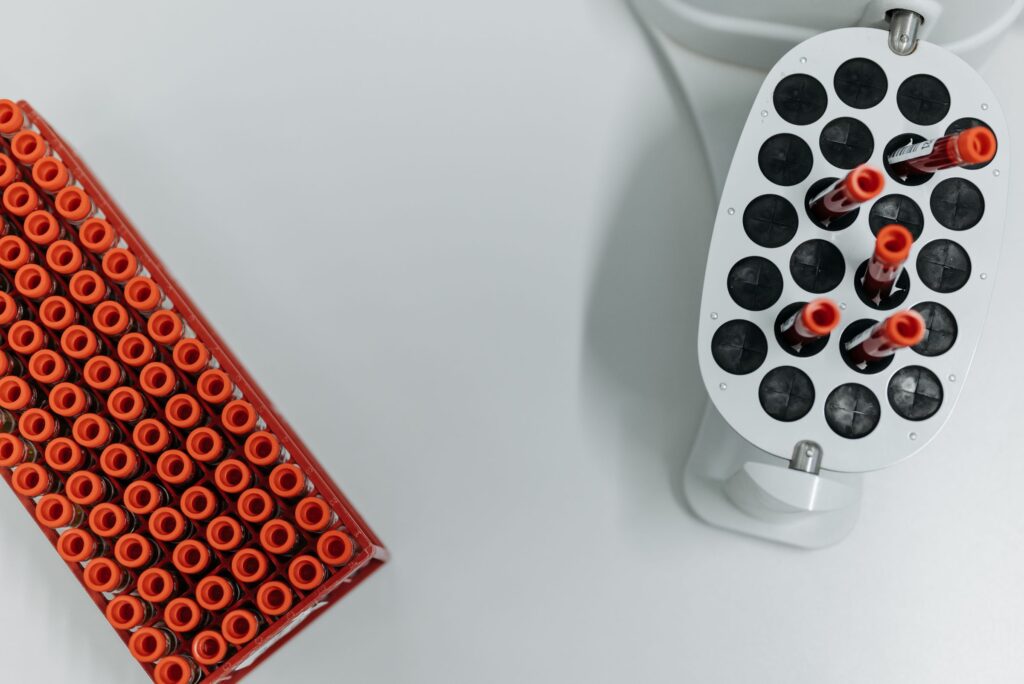
Health apps that began by counting steps and tracking sleep are now adding blood tests. You can book a lab visit, pay in the app and see results beside your activity data. This article explains what one such service offers, what the U.S. Food and Drug Administration (FDA) says about wellness products compared with cleared medical devices, and what these tests cannot tell you. It is general information, not medical advice.
Key takeaways
- Oura, a ring maker, offers a $99 “Health Panels” blood test in its app, run by Quest Diagnostics. Its page lists 50 biomarkers and calls the panels “not diagnostic tools.”
- FDA generally does not review general wellness products or low-risk tests before they are sold. That differs from a device FDA has cleared for a medical purpose.
- A result outside the normal range does not always mean a problem, and a result inside it does not guarantee good health.
- App companies may not be covered by the main U.S. health privacy law, so read what they say about your data.
From step counts to lab results
Wearable apps measure things on the outside, such as movement and sleep. A blood test measures something inside the body, using a sample taken at a lab. What is new is that both now sit in one app.
Oura’s own page describes the service. As of its latest update on October 22, 2026, it says:
- You schedule and pay in the Oura app, then visit one of more than 2,000 Quest locations in the United States for the blood draw.
- The panel measures 50 biomarkers. A biomarker is a measurable sign in your body, such as a blood sugar or cholesterol level.
- The price is $99. It can be paid from a health savings or flexible spending account, but it cannot be billed to insurance.
- Initial results usually appear in 24 to 48 hours, and full processing can take up to 15 business days.
- It is for U.S. members aged 18 or older with an Oura Ring Gen3 or Ring 4 and an active membership, and it is not offered in five states, including New York.
- Clinicians from a medical partner, SteadyMD, review results. A result marked “Critical” brings a call and a secure message. Other results are for you to discuss with your own clinician.
Search results also show Whoop offering a blood-testing service, but its pages could not be opened for this update, so we do not describe it. Check any company’s current page, because prices and rules change.
What “FDA-cleared” does and does not mean
A polished app can look as if the government has checked it. Often it has not.
FDA’s General Wellness guidance, issued in January 2026, covers low-risk products that promote a healthy lifestyle. Under a change made by Congress, certain healthy-lifestyle software that has nothing to do with diagnosing or treating a disease is no longer treated as a medical device. FDA does not generally examine such features before they reach the public.
Blood tests sold directly to consumers are a mixed picture. FDA says tests for general wellness or low-risk purposes generally are not reviewed before they are offered, while tests for moderate or high-risk medical purposes generally are. It also says it generally does not review tests designed and run in a single lab and ordered by a provider.
The pages we opened do not say whether each test in Oura’s panel has FDA clearance. Oura says only that the panels are not diagnostic tools. If it matters to you, ask the company.
A real example: blood pressure on wearables
In a September 16, 2025 safety communication, FDA warned that many over-the-counter blood pressure devices lack FDA marketing authorization, including blood pressure features on smartwatches and smart rings. FDA said inaccurate readings can lead to a wrong diagnosis or delayed treatment. It explained how to check a device in its public 510(k) listing of devices cleared for sale.
FDA also sent Whoop a warning letter on July 14, 2025, about its Blood Pressure Insights feature. On June 17, 2026, after Whoop changed the feature and its labeling, FDA wrote that it does not intend to enforce device requirements for the product as modified. The letter covers only that product and does not call it cleared.
At a glance
| Kind of product | Does FDA review it before sale? | What it means for you |
|---|---|---|
| Device with FDA clearance or authorization | Yes, for its stated medical purpose | You can look it up in FDA’s public listing |
| General wellness feature, such as activity or sleep scores | Generally not examined | Meant for a healthy lifestyle, not for diagnosing disease |
| Consumer test for wellness or low-risk purposes | Generally not reviewed | Do not treat the result as proof |
| Consumer test for a moderate or high-risk medical purpose | Generally reviewed | FDA lists the tests it has authorized |
What these tests cannot tell you
Even a well-run lab test is only one piece of the picture. MedlinePlus, from the National Library of Medicine, and FDA make several points worth knowing.
- “Normal” is a range, not a verdict. A reference range is the span of values seen in large groups of healthy people. Healthy people sometimes fall outside it, and a result inside it does not guarantee good health.
- Labs differ. Compare your result only to the range on your own report. Using the same lab helps if you track changes over time.
- Daily life changes results. Food and drink, medicines and supplements, hard exercise and whether you fasted can all affect a result.
- No test is perfect. False positives and false negatives are uncommon but possible.
- Tests do not replace a doctor’s visit. FDA says home tests should not replace regular visits. Results are best read alongside your history, an exam and other tests.
The same caution applies to scores that promise to estimate your “biological age” or lifespan. Nothing on the FDA or MedlinePlus pages we read says a panel can forecast how long you will live, so ask what evidence supports any such score.
Your data once it is in an app
Blood results are very personal. The main U.S. health privacy law, HIPAA, applies to health plans, certain health care providers and clearinghouses, and the businesses that work for them. A consumer app company outside those groups is not governed by HIPAA, based on the Federal Trade Commission’s (FTC) description of who is covered.
The FTC has other tools. Its Health Breach Notification Rule covers businesses outside HIPAA, such as vendors of personal health records, and counts unauthorized sharing of health information as a breach, not only hacking. The FTC Act also bars deceptive claims about how health data is used. Even so, the privacy policy is the best place to learn who can see your results and whether you can delete them.
Questions to ask before you sign up
- Is this test meant to diagnose anything, or is it for general wellness?
- Does the company say whether the specific tests are FDA-cleared?
- Who reviews my results, and what happens if one is out of range?
- What does the privacy policy say about sharing and deleting my data?
Frequently asked questions
Is an app blood test the same as one my doctor orders?
Not exactly. The sample may go to a large commercial lab either way, but the purpose differs. MedlinePlus says home kits should never replace testing your provider orders. Oura’s page says its panels complement medical advice and do not replace it.
Will my insurance pay for it?
Oura says its panels cannot be billed to insurance, though HSA and FSA funds can be used. For any other service, ask both the company and your own plan.
Can I add results from my doctor?
Oura says members can upload existing lab results as PDF files. Other apps vary, so check each one.
What should I do if a result looks abnormal?
Stay calm. MedlinePlus notes that results outside the range do not always signal a problem. Share the result with your clinician, and if you feel unwell, contact a health care provider rather than waiting for an app.
Before you decide
An app that gathers results in one place can be convenient. But a tidy chart is not a diagnosis, and a wellness score is not a medical opinion. If you try a service, treat it as a way to start a conversation with your doctor, and read the privacy terms first.
Sources
- Health Panels & Lab Uploads (Oura)
- General Wellness: Policy for Low Risk Devices | FDA (U.S. Food and Drug Administration)
- Direct-to-Consumer Tests | FDA (U.S. Food and Drug Administration)
- Home Use Tests | FDA (U.S. Food and Drug Administration)
- Do Not Use Unauthorized Devices for Measuring Blood Pressure: FDA Safety Communication | FDA (U.S. Food and Drug Administration)
- WHOOP, Inc. – 709755 – 06/17/2026 | FDA (U.S. Food and Drug Administration)
- How to Understand Your Lab Results (MedlinePlus, National Library of Medicine)
- Collecting, Using, or Sharing Consumer Health Information? Look to HIPAA, the FTC Act, and the Health Breach Notification Rule (Federal Trade Commission)
Last updated: November 2026. This article is general information, not medical or insurance advice.